
CLEANFLUE NI CUSTOMER INFORMATION
Chimney Lead Tray Guidance
The essential guide to internal damp proofing
In Northern Ireland’s wet and wind-driven climate, chimney stacks are highly exposed. External flashing protects the roof junction; an internal lead tray provides a separate barrier against moisture travelling down through porous masonry.
WHAT IS A CHIMNEY LEAD TRAY?
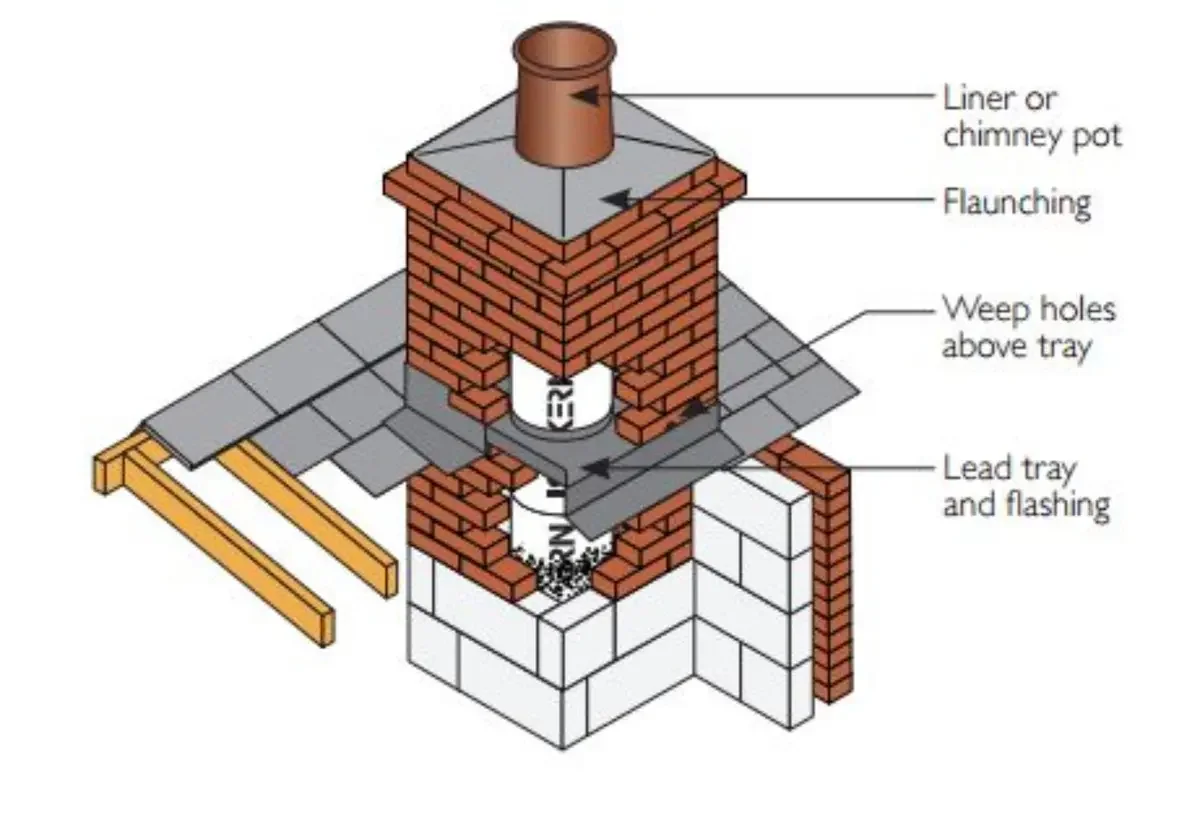
A chimney lead tray—often described as a chimney damp-proof course or DPC tray—is a continuous, custom-fabricated metal barrier built horizontally into the brick or stone chimney stack.
Unlike the external apron, step and back-gutter flashings, the tray is normally hidden from view. It is integrated into the masonry when the chimney is built or during a suitable rebuild.
HOW IT PROTECTS YOUR HOME
Brick, stone and mortar can absorb moisture. During prolonged or driving rain, water may move downward through the chimney stack. Without an effective internal barrier, damp can reach the roof space or rooms below.
- Catches moisture filtering down through the upper masonry
- Uses formed upstands to contain and direct the intercepted water
- Discharges water to the exterior through correctly detailed open perp joints or weep vents
- Is formed around flue openings and liners so the structural core remains protected
The exact tray shape, upstands, laps, joints and flue penetrations must be designed and formed by an experienced leadwork specialist.
CHIMNEY LEAD TRAY DIAGRAM
KEY MATERIAL SPECIFICATIONS
The supplied guidance specifies Code 5 lead. Code 5 is nominally 2.24mm thick under the UK lead-sheet coding system. Final selection must still be confirmed for the particular tray design and exposure.
The supplied specification calls for internal lead surfaces exposed to wet or aggressive mortar conditions to receive a suitable protective bituminous coating. The product and application method should follow the lead-sheet supplier’s technical advice.
Visible projecting lead edges may be treated with patination oil to reduce uneven carbonate run-off and staining on surrounding roof finishes.
SIGNS YOUR CHIMNEY NEEDS ATTENTION
An older stack may have no effective tray, or an existing tray, joint or penetration may have failed. Warning signs can include:
- Damp patches or brown staining around the chimney breast, walls or ceilings
- Peeling wallpaper, blistering paint or damaged plaster in upper rooms
- Musty odours in the roof space or attic
- Damp roof timbers or staining close to the chimney
- Water visibly running down the outside of the flue liner
- Recurring moisture after external flashing repairs
SUMMARY OVERVIEW
| Feature | Specification & benefit |
|---|---|
| Primary function | An internal damp-proof course that intercepts water absorbed through porous chimney masonry. |
| Material standard | The supplied specification calls for Code 5 rolled lead sheet—nominally 2.24mm thick—for robust structural durability. |
| Drainage requirement | Correctly formed falls, upstands and open weep outlets allow intercepted water to discharge outside. |
| Service life | Correctly specified and installed lead sheet can last for many decades and may exceed 100 years. Actual life depends on design, workmanship, exposure, movement and maintenance. |
NEED HELP WITH A LEAKING CHIMNEY?
CleanFlue NI specialises in chimney safety, sweeping and structural inspections that can help identify the likely source of a damp problem.